Blood tests and heart imaging answer different questions. Bloodwork shows risk building. Imaging shows what's already happened. You need both, and people often assume one covers the other.
Why You Need Blood and Imaging
Cholesterol and inflammatory markers describe the process that narrows arteries over years. Imaging describes the result: rhythm, chamber size, how hard it's pumping, whether the valves work. A clean cholesterol report doesn't mean clear arteries, and a normal resting ECG doesn't rule out narrowing that only shows under load.
So cardiac screening layers. Blood markers, then a resting trace, then imaging or a stress test if your risk justifies it. Each step answers something the one before it couldn't.
Who Should Consider These Tests
- Chest pain, tightness or pressure
- Breathless doing things you managed easily before
- Palpitations, dizziness, or you've fainted
- Diabetes, high BP or high cholesterol
- Heart disease in the family, or you smoke
- You're starting to exercise again after years off
What Each Test Tells You
This page lists 9 options. Here's what each one actually measures, so you can pick instead of guessing.
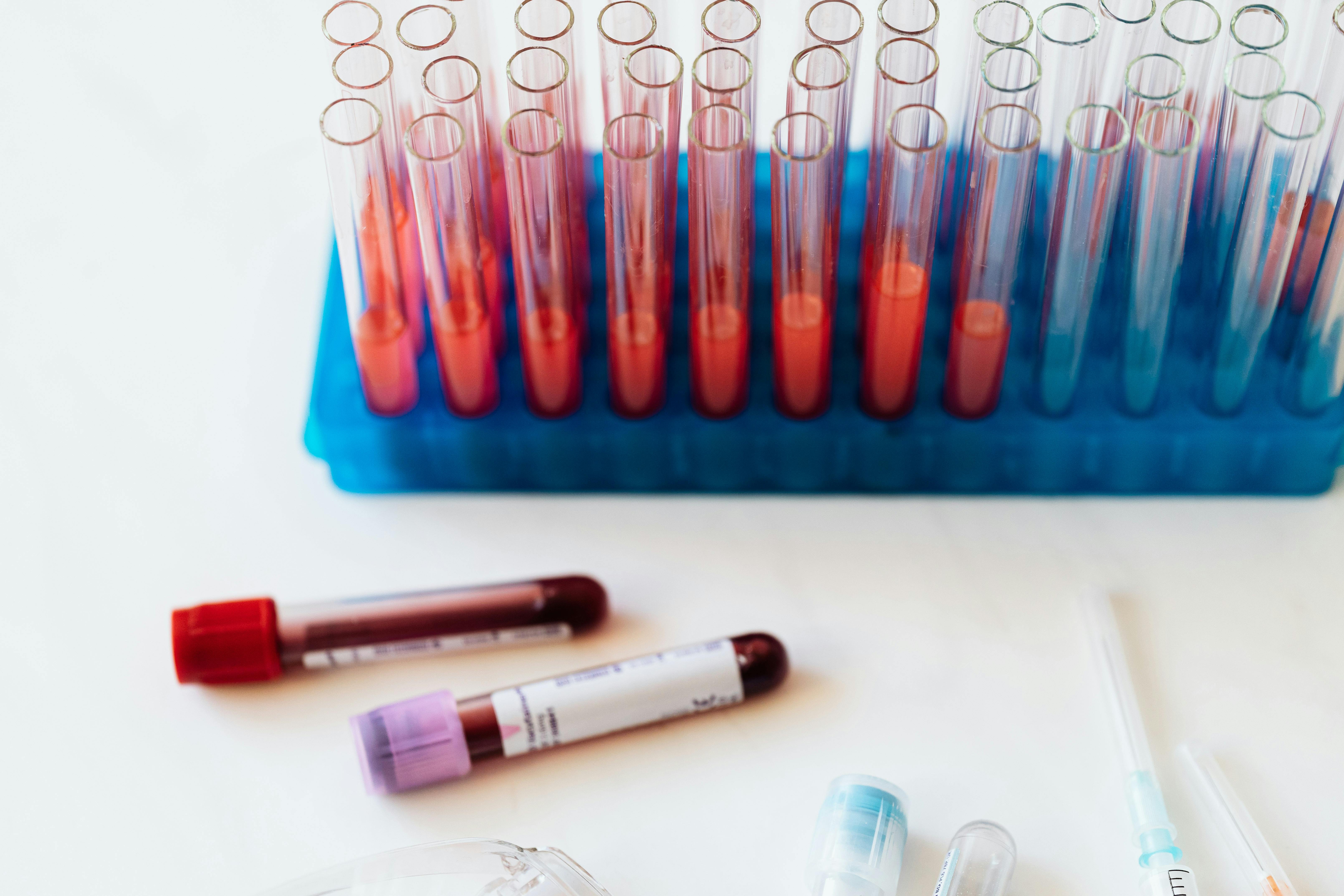
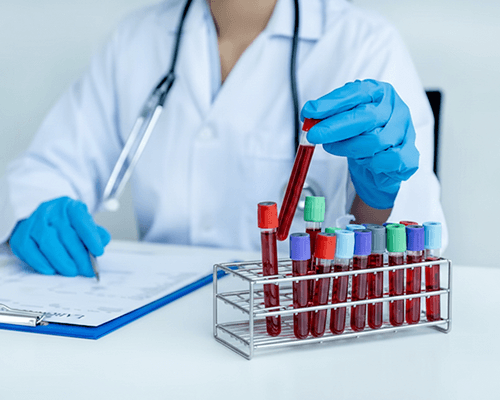
Blood tests
- PT/INR Test : How long your blood takes to clot. If you're on warfarin, this number sets your dose.
- hs-CRP Test : The sensitive version of CRP. Picks up the low-grade inflammation that matters for heart risk, which the standard test misses.
- HbA1c : Your average sugar over the last two to three months. One good week won't fix this number, which is the point of it.
- Lipid Panel : Splits your cholesterol into the good, the bad and the triglycerides. High cholesterol has no symptoms at all, which is exactly the problem.
- CPK (MB) Test : The heart-specific version of CK, used when the question is whether heart muscle has been damaged.
Scans
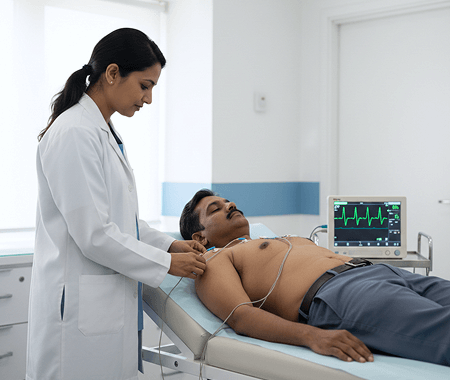
- Electrocardiogram (ECG) : A few minutes lying still while it records your heart's rhythm. Quick, cheap, and the standard starting point for anything cardiac.
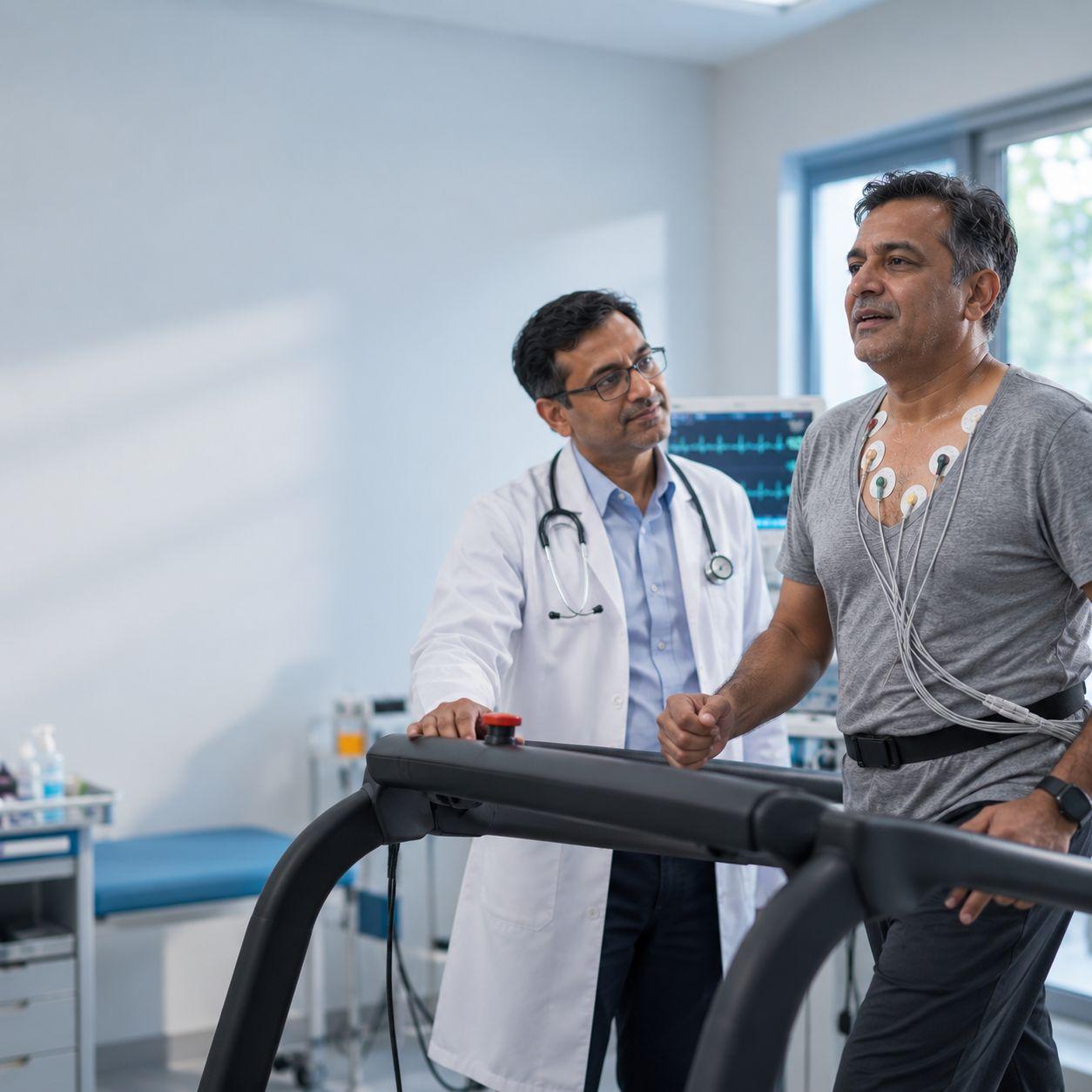
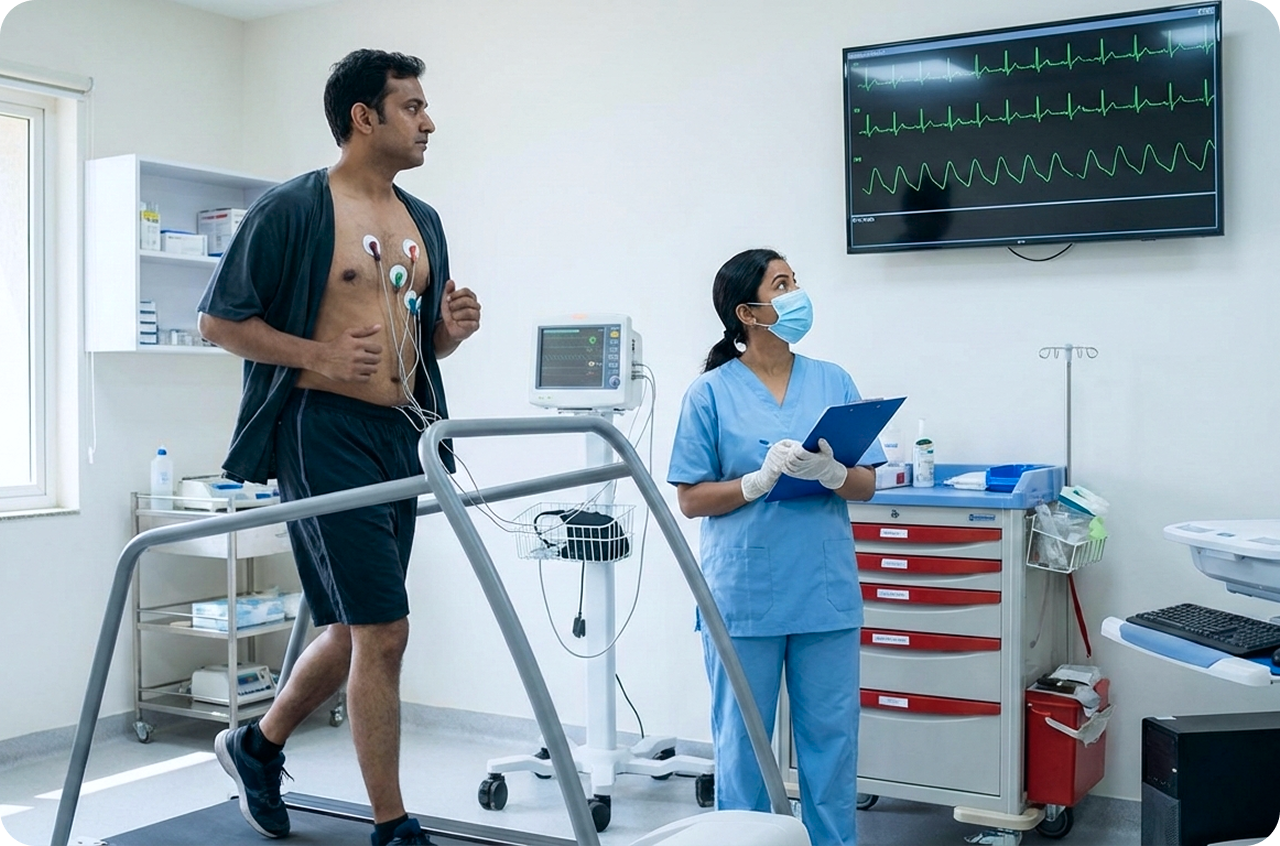
- Exercise Stress Test : You walk on a treadmill while your heart's monitored. Some problems only show up when the heart's working hard, and this is how you find them.
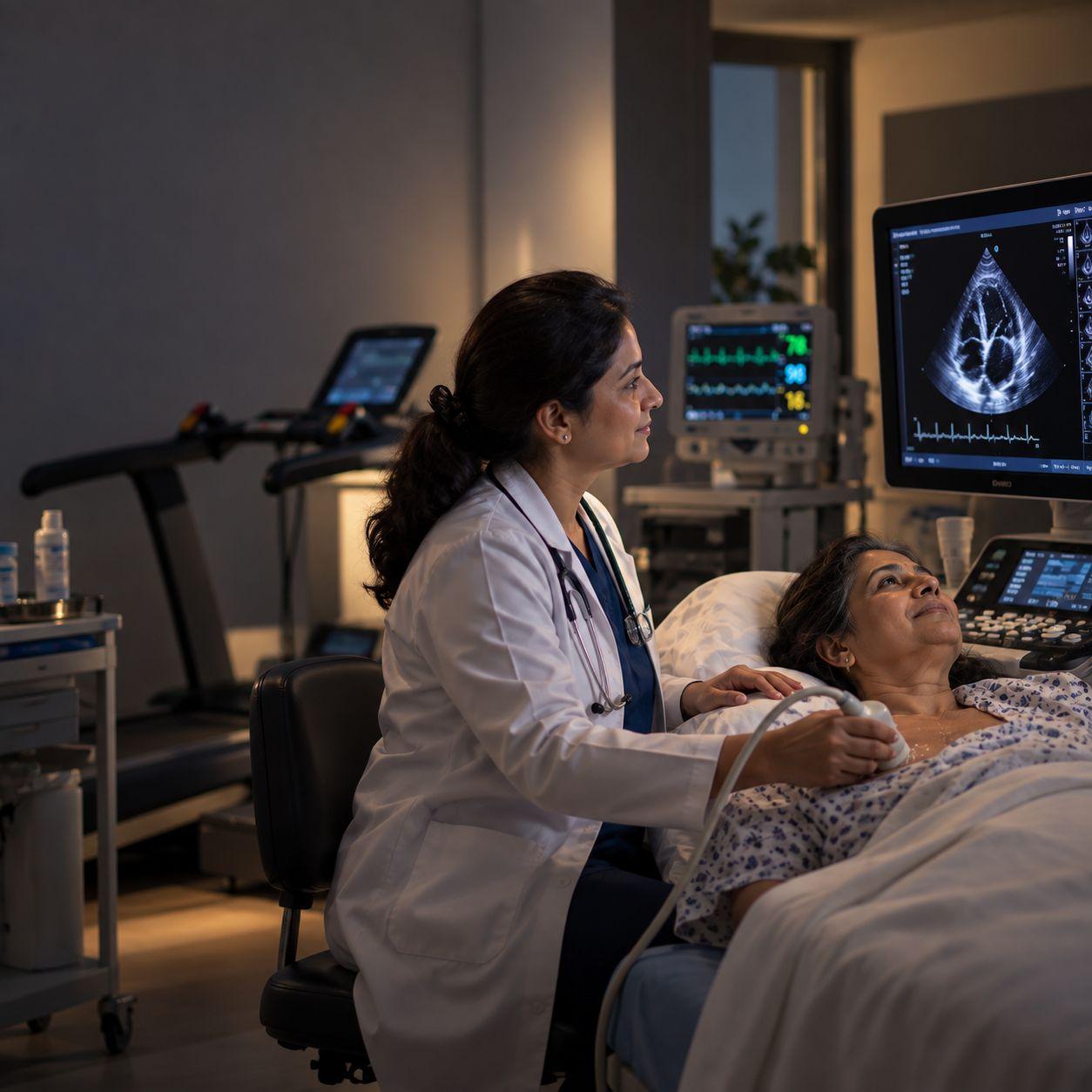
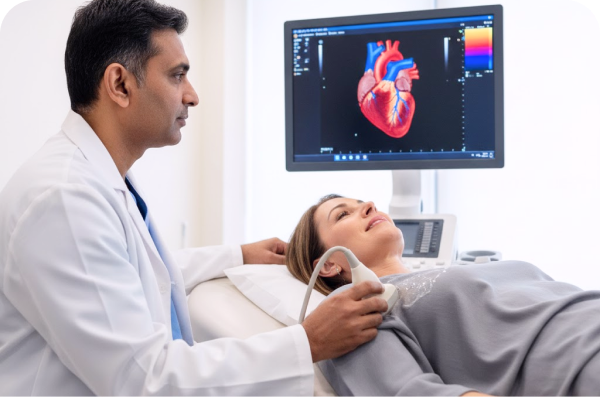
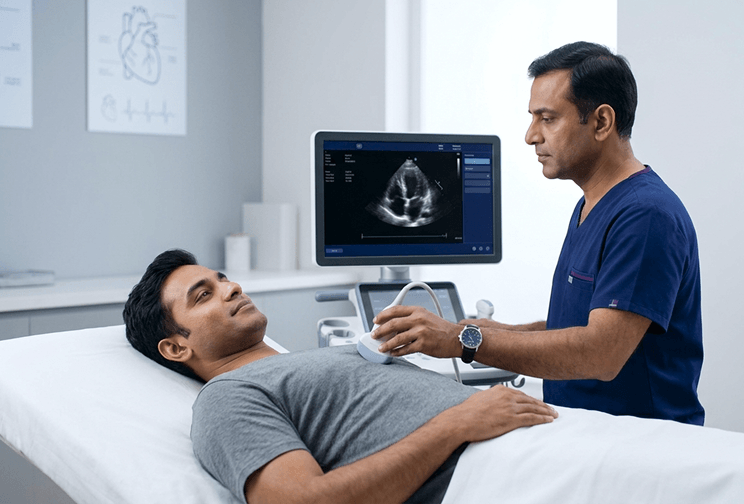
- 2D Echo : An ultrasound of your heart, beating, live on screen. Shows how strongly it pumps and whether the valves are doing their job. No radiation.
Packages
- CARDIAC PROFILE - 1 : The core cardiac blood markers bundled together, cheaper than picking them off individually.
How to Prepare
- No fasting : CPK (MB) Test, HbA1c, hs-CRP Test
- Nothing to do beforehand : 2D Echo, Electrocardiogram (ECG)
- 9 to 12 hours fasting. Water's fine : CARDIAC PROFILE - 1, Lipid Panel
- Light meal only. Wear proper shoes. Ask your doctor about pausing heart medication : Exercise Stress Test
- Never skip your blood thinner before this test : PT/INR Test
Tell the collection team everything you're taking, prescription or not. Plenty of supplements move these numbers, and without that context your report reads wrong.
How Often to Repeat
Once a year if you've got diabetes, high BP, high cholesterol, a family history, or you smoke. Your doctor sets the interval.
Understanding Your Results
Severe chest pain, especially with sweating, nausea or breathlessness, needs emergency care right now. Not a booking. Screening is for people who aren't in the middle of something.
These tests point at a diagnosis. They don't make one. Read your report with a doctor who knows your history and what you're currently taking.









 Made with Levo